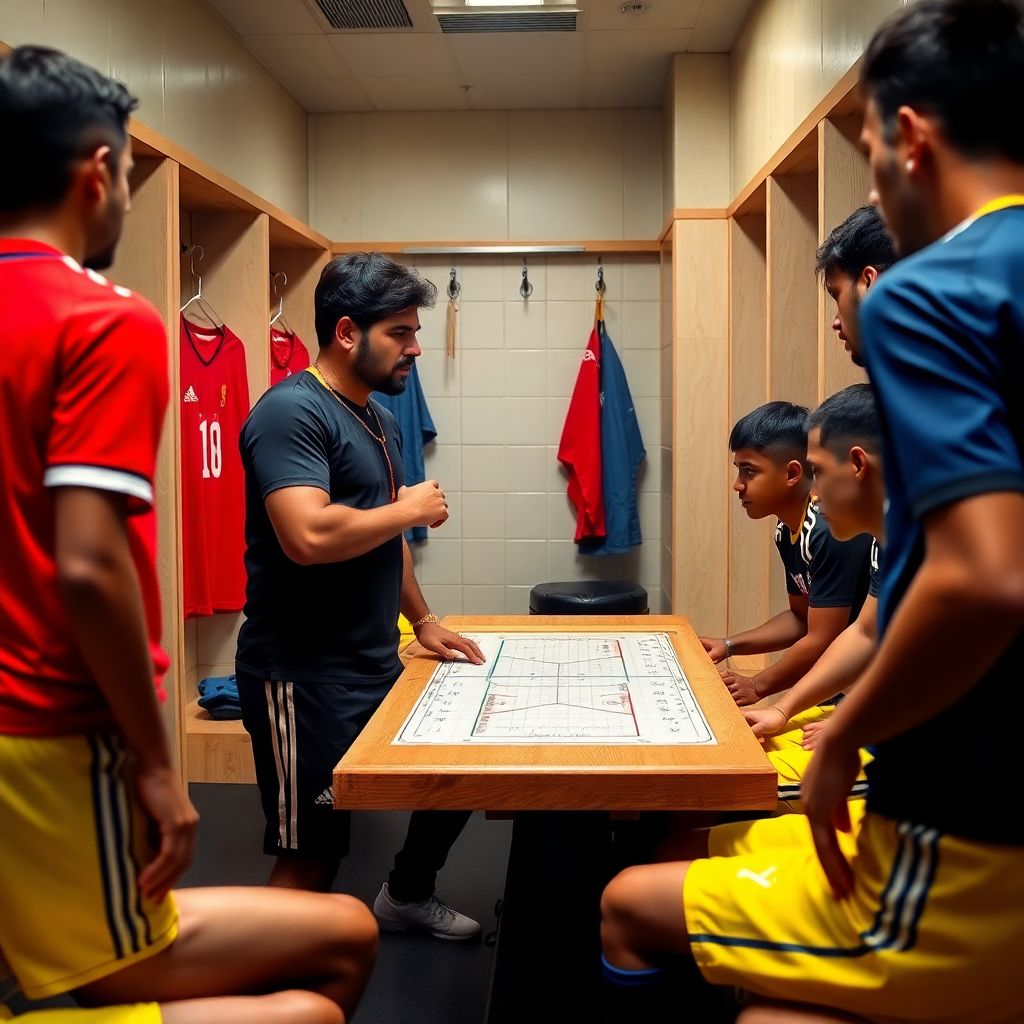
Mentorship in squad management gives players safe, structured support to improve convivencia, discipline and competitive focus. By pairing clear rules with trusted mentors, clubs turn daily friction into learning moments, align behavior with the game model and protect mental health, especially in gestão de elenco no futebol profissional in Brazil.
Mentorship outcomes that change squad convivencia and competitive edge
- Clear behavior standards are reinforced daily by mentors, not only by the coach, reducing noise and misunderstandings in the locker room.
- Individual attention helps transform “difficult” profiles into useful leaders instead of constant sources of conflict and sanctions.
- Competitive focus is trained as a habit during the week, not only demanded on match day, improving emotional control under pressure.
- Young talents integrate faster into the squad’s culture, protecting investments in base categories and transition to the professional group.
- Staff gain early-warning signals about burnout, family issues or off-field risks, without turning mentorship into therapy or surveillance.
- The head coach can concentrate on game model and strategy while mentors manage micro-conflicts and day‑to‑day convivencia.
Using mentorship to shape daily coexistence and team culture
A structured programa de mentoria para jogadores de futebol is useful when the club wants consistent behavior standards, smoother coexistence and better focus in training, but lacks time or bandwidth on the technical staff side. It works especially well with mixed-age squads, frequent promotions from the academy and strong external pressure.
Mentorship is not recommended when:
- Leadership rejects shared responsibility and wants all discipline decisions centralized only in the head coach.
- The club culture tolerates or even rewards toxic behaviors (bullying, hazing, humiliation) as “tradition”.
- There is no minimal psychological safety: players fear that everything said in mentoring will be used against them.
- The club expects mentorship to replace licensed medical or psychological care instead of complementing it with clear boundaries.
Before launching any mentoria esportiva para atletas de alto rendimento, define what “good convivencia” looks like in your context: communication tone, punctuality, respect for staff, social media conduct and reactions to rotation, substitution or benching. Mentors then connect these standards with everyday micro-behaviors: greetings, feedback, jokes, complaints and how players handle frustration.
For Brazilian pt_BR reality, consider:
- Different regional cultures inside the same elenco and how they read authority, irony and criticism.
- Agents and family influence, especially for young players with sudden financial change.
- Media and social network pressure, where one impulsive post can destroy trust inside the group.
Mentor strategies for enforcing discipline without eroding autonomy
To connect disciplina and autonomia in gestão de elenco no futebol profissional, mentors need clear tools, access and limits defined by the club. Think of them as “behavior coaches” who work in parallel with tactical and physical coaches.
Core requirements and instruments:
- Clear mandate from leadership – The head coach and coordination must specify what mentors can decide (for example, internal agreements, apologies, group talks) and what always escalates (legal issues, threats, suspected abuse or discrimination).
- Agreed code of conduct – A short, practical document co-created with players, listing concrete behaviors expected in training, travel, hotel, recovery and media. Mentors use this as the neutral reference when discussing discipline, avoiding personal attacks.
- Confidential conversation spaces – A private room or regular time slots where players can talk without teammates listening. Mentors should clarify confidentiality limits (anything involving safety, crime or self-harm must be escalated).
- Simple tracking system – A secure log (spreadsheet or club system) for punctuality, training attitude, conflicts and completed follow-up conversations, without sensitive psychological diagnoses. The goal is patterns, not labels.
- Training and supervision for mentors – Short internal training or a curso online de gestão de elenco e liderança esportiva can help mentors learn active listening, boundaries, de-escalation and how to avoid dual roles (friend vs. authority).
- Access to staff meetings – Mentors need a voice in staff debriefs to share behavior trends and suggest preventive actions, always within privacy rules and without exposing specific players unnecessarily.
Safe discipline strategy examples:
- Use “pre-agreed consequences” (for example, squad rules decided in pre-season) instead of impulsive punishments.
- Promote self-responsibility: the player proposes realistic reparations (team talk, extra community activity) rather than only accepting fines.
- Separate person from behavior: attack the action, not the character (“This was irresponsible”, not “You are irresponsible”).
Creating routines and drills that sharpen competitive focus
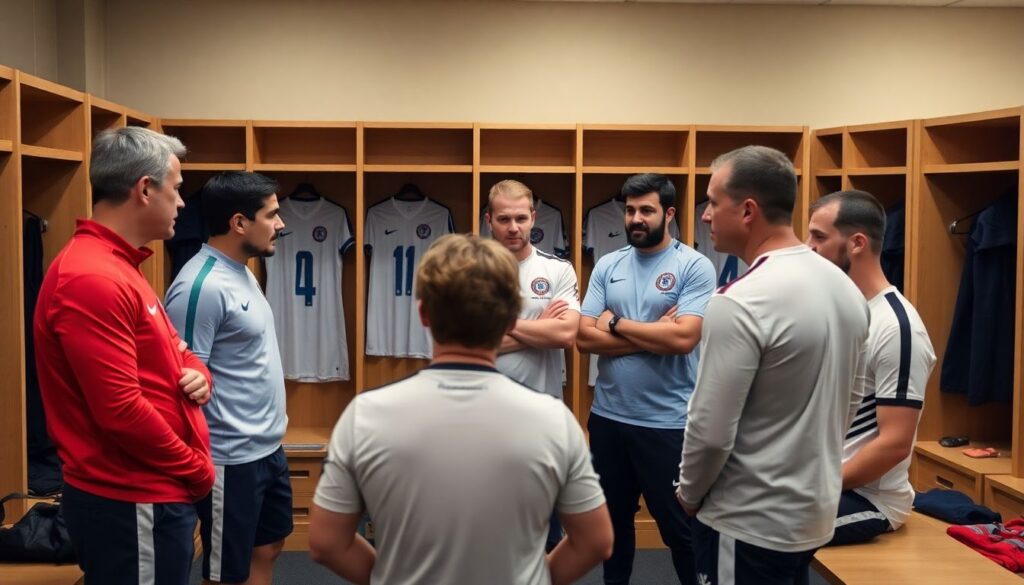
Before designing routines, clarify with staff that competitive focus training is mental and behavioral, not a way to push players into overtraining or ignoring pain and fatigue. It should respect medical guidance and recovery plans and never encourage playing through unsafe injuries.
Key risks and limitations to consider:
- Avoid turning focus routines into superstition or rigid rituals that increase anxiety if something changes on match day.
- Do not expose players’ vulnerabilities shared in mentoring during group drills or jokes.
- Never use “focus” as a justification to ignore mental health signs such as persistent insomnia, panic or depressive symptoms.
- Ensure drills do not simulate violence, humiliation or discrimination, even “as a joke”.
- Adapt intensity for younger or recently injured athletes, preventing burnout and cognitive overload.
- Map current focus leaks in daily routine Mentors and staff identify where players most often lose concentration: arrival at CT, warm-up, tactical meetings, small-sided games, or during substitutions. Use brief observations and player reports, not secret recording or invasive monitoring.
- Co-create pre-training and pre-game micro-rituals Mentors facilitate a quick group session to define 2-3 shared actions before training and matches, such as a short huddle, breathing sequence, or key-phrase call. Each action must be safe, inclusive and easy to execute in away games.
- Introduce focus drills inside existing exercises Instead of adding long extra sessions, mentors collaborate with coaches to embed simple focus tasks into standard drills:
- Call out triggers (“reset”, “next ball”) after errors to train emotional recovery.
- Add decision rules that require scanning (for example, call color or number before receiving the ball).
- Use short “stop – breathe – decide” pauses in transitions.
- Train response to pressure and injustice Use safe, controlled scenarios where refereeing mistakes or provocations are simulated verbally, never physically. Mentors guide players to:
- Notice first emotional reaction.
- Apply a chosen regulation strategy (breathing, self-talk, walking away).
- Refocus attention on task (marking, positioning, next run).
- Design post-session reflection routines After key training sessions and matches, mentors lead a 5-10 minute reflection focused on:
- What helped maintain focus.
- Which triggers broke concentration.
- One concrete behavior to adjust next time.
Keep it solution-oriented, avoiding blame circles.
- Define simple KPIs and review cycles Together with performance analysts, mentors track:
- Number of training incidents where focus was clearly lost (arguing, quitting on play, visible frustration).
- Player self-ratings of focus before and after implementing routines.
- Qualitative feedback from staff on consistency of attention in key drills.
Reviews should be regular but brief, adjusting routines instead of rigidly defending them.
Practical conflict-resolution models mentors teach and apply
To check if your conflict-resolution approach is working, mentors can use a simple checklist during the season. If most items are consistently “yes”, the model is likely healthy and sustainable.
- Conflicts are identified early, before they become public fights, social media posts or agent dramas.
- Players involved in a conflict can explain the other person’s point of view, even if they disagree.
- Simple ground rules (no shouting, no insults, no interruptions) are followed during mediated conversations.
- Agreements at the end of a conflict talk are concrete and observable (for example, “we arrive 10 minutes earlier to align on set pieces”).
- Mentors document only what is necessary, avoiding emotional judgments or confidential details in written records.
- Power differences are managed: younger players, foreigners or women in mixed contexts feel safe to speak.
- Repeated conflicts with the same actors trigger a structured review, not only new warnings.
- Confidentiality is respected: team gossip does not reveal private information from mediated sessions.
- When a situation exceeds mentors’ competence (harassment, discrimination, crime suspicion), they promptly activate formal club protocols.
- After resolved conflicts, on-field collaboration between involved players visibly improves or at least returns to a neutral, professional level.
Performance monitoring: mentor-led metrics, feedback and corrective action
Monitoring behavior and focus is essential, but certain mistakes undermine trust and the effectiveness of any consultoria em disciplina e foco competitivo para times. Mentors and staff should watch out for these traps.
- Turning every behavioral data point into punishment, instead of using it mainly for coaching, support and early prevention.
- Collecting sensitive personal information (health, family, beliefs) without clear purpose, consent or secure storage.
- Using public “rankings of discipline” that shame players and feed labels such as “problematic” or “lazy”.
- Confusing correlation with intention: assuming a late arrival is always a sign of disrespect, without context.
- Giving feedback only when something goes wrong, ignoring positive discipline and progress in focus habits.
- Overloading mentors with analytical tasks that belong to other staff (for example, GPS load analysis or medical decisions).
- Skipping regular one-to-ones with key profiles (leaders, captains, recurrently frustrated players) and reacting only in crisis.
- Failing to align disciplinary actions across staff members, creating contradictions between what the head coach and mentors say.
- Not adjusting expectations for players returning from injury or major life events, misreading adaptation as “lack of commitment”.
- Ignoring staff well-being: mentors who never debrief or receive supervision can carry accumulated emotional load and burnout.
Extending a mentorship model across skill levels and subgroups
Once basic processes are stable in the main squad, clubs often ask how to extend mentorship safely to academy teams, women’s football and support staff. There is no single formula, but several structured alternatives can be combined.
- Peer-mentor captains within the professional squad Senior players receive basic mentoring training and support younger teammates, especially those recently promoted. This works when captains already model good discipline and communication and are willing to separate personal friendships from the mentor role.
- Cross-category mentorship between professional and academy squads Selected professionals mentor academy players in transitions (under-20 to pro), aligning expectations about training intensity, behavior and media exposure. Clear boundaries are required to avoid dependency or informal agent roles.
- Dedicated mentorship cell for women’s and youth teams A small specialized group, possibly supported by external experts, adapts principles to gender, age and cultural specifics. This is useful where resources are limited but the club wants consistent philosophy across categories.
- External advisory support for staff and leadership Periodic sessions with specialists in gestão de elenco no futebol profissional and leadership help coaches and coordinators refine processes without adding full-time roles. This can be framed as light consultoria em disciplina e foco competitivo para times, focused on case discussion and protocol improvement.
For clubs without immediate internal capacity, investing in a targeted curso online de gestão de elenco e liderança esportiva for selected staff may be a practical first step toward building an in-house mentorship program.
Concise guidance for common implementation hurdles
How can a small club start mentorship without hiring new full-time staff?
Begin by designating one or two existing staff members with good player trust and offering them basic mentoring training. Reduce their other tasks slightly, give them a clear mandate and pilot with a limited group of players before scaling.
What if players see mentorship as punishment or “therapy for weak minds”?
Position mentorship as a high-performance tool, not a clinic. Include leaders and top performers in the program, show how sessions connect to on-field goals and keep logistics professional: scheduled, brief, focused on behaviors and habits.
How do we protect confidentiality while still informing the coach?
Agree on categories of information, not details. Mentors share patterns (motivation drop, adaptation issues) and practical recommendations, but avoid revealing specific stories or personal confessions unless safety is at risk or the player authorizes.
Can mentorship replace sports psychology or medical support?
No. Mentors handle daily behavior, communication and focus habits, but never diagnose or treat medical or psychological conditions. Any signs of serious distress, addiction or self-harm must be referred to qualified professionals, following club protocols.
What is a realistic time frame to see culture changes in the squad?
You may notice small improvements in communication and punctuality within weeks, but deeper culture shifts take longer. Track consistency over cycles, such as full pre-season and early competition rounds, and be ready to adjust processes and mentors’ workload.
How should we involve agents and families in the mentorship process?
Clarify that mentors work for the club and the team, not for agents or families, but can coordinate when interests align. Limit interactions to structured meetings, avoid parallel negotiations and always protect the player’s autonomy and privacy.