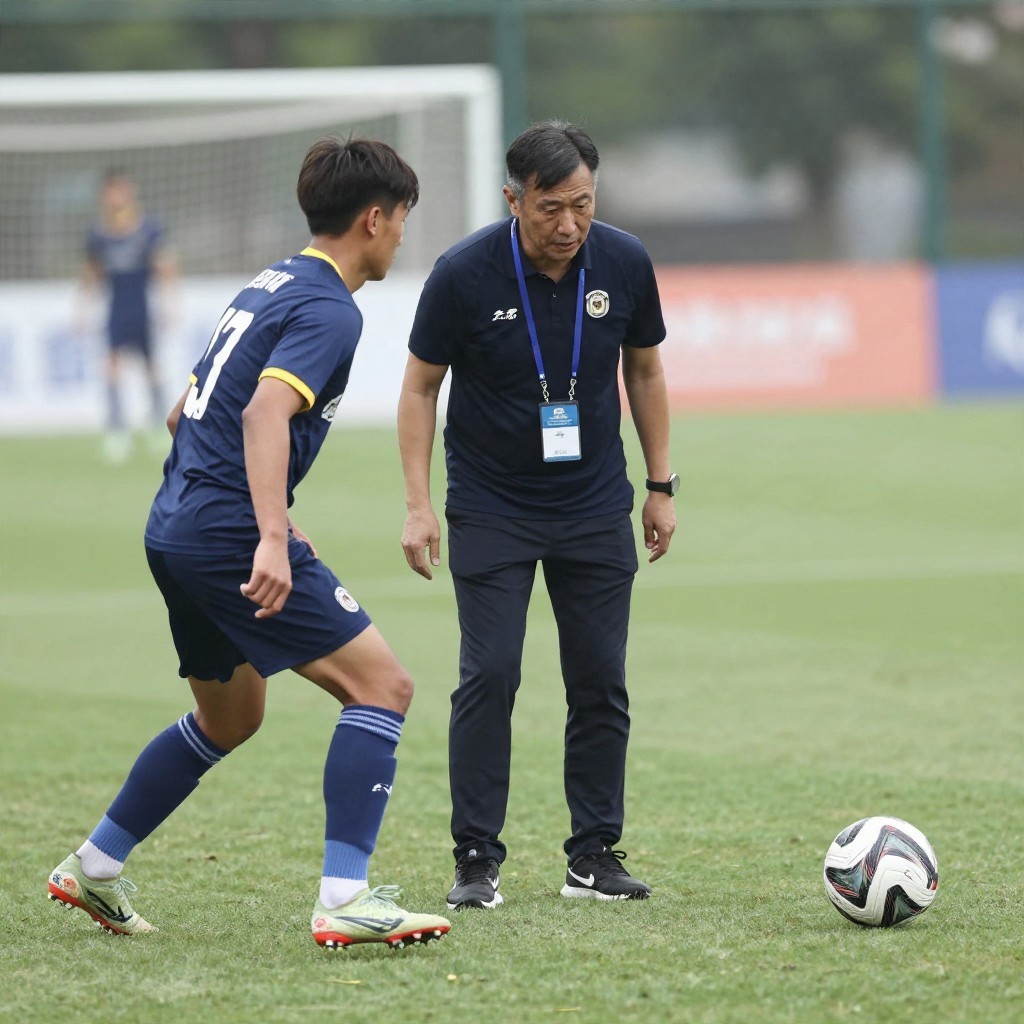
Most game-reading errors come from reacting to the ball before checking pressure, available space, and opponent movement. Correct them with low-risk review first: identify the missed cue on video or from memory, test one explanation, then rehearse a specific adjustment. A mentor can shorten this loop by asking focused questions without making every decision for the player.
The Fastest Leverage Points in Better Game Reading
- Before receiving, scan for the nearest presser, the next defender, and a usable space behind or beside them.
- Separate what you observed from what you assumed: a defender’s body angle is a cue, not proof of their next action.
- Review mistakes with video or notes before changing tactics; begin with read-only checks, not a wholesale playing-style adjustment.
- Choose one correction to test in training, such as checking a shoulder before the ball arrives.
- Use a mentor to improve your questions and review process, not to outsource every decision.
Why Players Misread Pressure, Space, and Opponent Intent
Intermediate players often know what they intended to do but miss the cue that should have changed the decision. Look for these visible symptoms:
- You receive with your back to pressure even when a quick scan could have shown the presser’s approach.
- You pass into a lane that looked open but closed as the opponent shifted across.
- You carry the ball toward pressure while a teammate has moved into a safer passing line.
- You force a forward pass because you expect a run, although the receiver is marked or facing the wrong way.
- You press the ball carrier and leave a nearby opponent free behind you.
- You repeat the same choice after the opponent has clearly adapted to it.
These symptoms do not prove that the decision was wrong: a sound choice can fail because of execution or an opponent’s response. Review the cue available at the time, rather than judging only by the outcome.
Common In-Game Errors and the Signals That Reveal Them
Use this checklist when reviewing a match, training clip, or remembered sequence. First note what was visible; do not immediately change your role, formation, or risk level.
- Did you scan before receiving, and did you identify where pressure was coming from?
- Was your body position suitable for the next action, or did it limit your view and passing options?
- Did the defender’s distance, speed, or approach angle change before you chose to pass, turn, or carry?
- Was the lane open when you acted, or had a defender started moving into it?
- Did a teammate offer a clear passing option, and could you see that option in time?
- Did you account for the cover defender, not just the opponent nearest the ball?
- Did your decision match the situation, such as protecting possession when support was limited?
- Did you repeat a pattern after the opponent had begun anticipating it?
A curso de leitura de jogo de futebol can help structure these observations, but apply its ideas to your position and level of play rather than copying generic examples.
How Mentors Diagnose Decision-Making Without Taking Over
A useful mentor starts with evidence and asks questions that let the player reconstruct the moment. This keeps the review practical: identify a cue, connect it to a decision, and agree on a test. In a mentoria para treinadores de futebol or player-focused mentoring session, ask the mentor to explain the reasoning behind a recommendation and define how you will check whether it helps.
Before trying a change, use the table to distinguish a possible reading error from a technical or execution problem:
| Symptom | Possible causes | How to check | How to correct |
|---|---|---|---|
| Repeatedly surprised by pressure on receipt | Late or incomplete scanning; attention fixed on the ball | Review the moment before the pass arrives. Note whether a scan was possible and where the presser was. | Practise a deliberate shoulder check before the ball travels, then confirm whether it changes your first touch or next option. |
| Passes intercepted in apparently open lanes | Reading the nearest defender but not the cover defender; acting after the lane starts closing | Freeze the clip just before the pass and trace the defenders’ movement and passing lane. | Check the lane again at the moment of action; use a safer supporting pass when it is closing. |
| Turning into pressure | Assuming there is space behind; receiving with a closed body position | Compare the defender’s approach angle with your body orientation and the available space. | Practise receiving side-on and using a one-touch layoff when the turn is blocked. |
| Pressing and leaving an opponent unmarked | Following the ball without checking nearby threats or teammates’ cover | Review the position of the nearest free opponent and the teammate responsible for covering. | Coordinate the press with a teammate; delay the challenge if stepping in would expose a dangerous option. |
| Forcing the same forward option repeatedly | Predictable choices; not noticing the opponent’s adjustment | Compare similar possessions and note whether defenders began blocking the expected pass. | Keep the forward option available, but rehearse a supporting or switching pass when the lane is covered. |
Review footage, notes, and the player’s explanation before changing match instructions. If the evidence is unclear, collect another example rather than making a high-impact adjustment from one incident.
A Troubleshooting Table for Turning Misreads into Adjustments
Follow these steps from low-risk observation to more demanding tests. Keep your normal role and team instructions unchanged until you have checked the evidence and agreed on a small adjustment with your coach or mentor.
- Recall the moment. Record the game situation, your position, and the action you chose without judging the result.
- Review available evidence. Watch the clip if available, or use a brief written note. Identify pressure, space, teammates, and opponent movement before your decision.
- Separate cue from assumption. Write what you actually saw, such as a defender closing from your left, and distinguish it from an interpretation, such as assuming a turn was safe.
- Check alternative explanations. Consider whether poor execution, limited support, or an unexpected opponent action contributed. Do not label every failed action a reading error.
- Select one low-risk correction. Choose a specific behaviour, such as scanning earlier or checking the lane again before passing.
- Rehearse in a controlled drill. Use a repeatable exercise that recreates the cue, then vary the pressure so the response is not tied to one predictable pattern.
- Test in normal play. Apply the adjustment in training or a suitable match situation while keeping other instructions stable.
- Review before escalating. Compare several examples. Only then discuss a broader change to positioning or tactics with the coach or mentor.
This sequence prioritizes read-only checks before intervention. Avoid changing formation, role, or risk-taking based on a single clip or a frustrating result.
Practice Routines That Build Faster, More Reliable Reads
Use short routines that connect a cue to an action. A curso de análise tática de futebol or curso de análise de desempenho no futebol may offer a review framework; assess whether it teaches you to interpret your own game situations rather than merely naming formations or presenting isolated clips.
- Scan-and-receive: Before receiving, identify the presser and one safer option. After the action, check whether your scan matched the pressure that arrived.
- Freeze-and-predict: Pause a clip before a player acts. State the pressure, open space, and likely opponent response, then watch what happens.
- Two-option review: For a disputed decision, identify the choice made and one realistic alternative. Explain the cue that would support each.
- Small-sided cue practice: Ask a coach to vary pressure or defensive starting positions so you must read the situation, not memorize a fixed response.
- Post-session note: Record one cue you read well, one you missed, and one adjustment to test next time.
Escalate to a coach, qualified analyst, or mentor when the same problem persists across multiple reviewed situations, when you cannot identify the relevant cues, or when a proposed change affects team responsibilities. A mentoria de futebol online can support video review and follow-up, provided the mentor has enough context about your position, competition, and coach’s instructions. Confirm significant tactical changes with your team coach before using them in a match.
How to Measure Progress Beyond Wins and Losses
Track behaviours that you can observe and review. A win or loss alone cannot show whether your reading improved, because outcomes also depend on teammates, opponents, and execution.
- Note whether you scanned before receiving in the situations you are practising.
- Record whether your first action matched the pressure and space visible at the time.
- Review whether you noticed a cover defender before attempting a risky pass or turn.
- Track how often you recognized a blocked option and selected a safer alternative.
- Compare similar situations across sessions instead of treating one incident as a trend.
- Ask a coach or mentor to review the same criteria consistently.
- Keep a brief log of the cue, decision, result, and next adjustment.
Keep the review focused: use the notes to choose the next practice target, not to score every decision as a success or failure.
Practical Answers About Mentorship and Game-Reading Mistakes
How quickly can a mentor help correct a game-reading mistake?
A mentor can make the review process clearer immediately, but reliable improvement depends on practising the correction and checking it in relevant situations. Ask for one observable adjustment at a time.
Should I change my playing style after one bad decision?
No. First review the available cues and compare similar moments. Make broader changes only after repeated evidence and discussion with your coach.
How can I tell a reading error from a technical mistake?
Check whether the decision matched the information available before the action. If the choice was reasonable but the pass, touch, or execution failed, the main issue may be technical rather than perceptual.
What should I bring to a mentoring session?
Bring a short clip or a clear account of the situation, your intended action, and what you noticed at the time. Include your position and relevant team instructions so advice fits the context.
Can online football mentoring work without match video?
It can help with structured reflection and practice planning, but precise diagnosis is harder without footage or detailed observations. Do not treat a general recommendation as proof of what happened in a specific match.
What is a safe first step when I am unsure about a tactical adjustment?
Review the situation without changing match instructions. Test a small, reversible behaviour in training and confirm any change to your role or team responsibilities with your coach.